


School Programs
2026-2027 School Year Programming
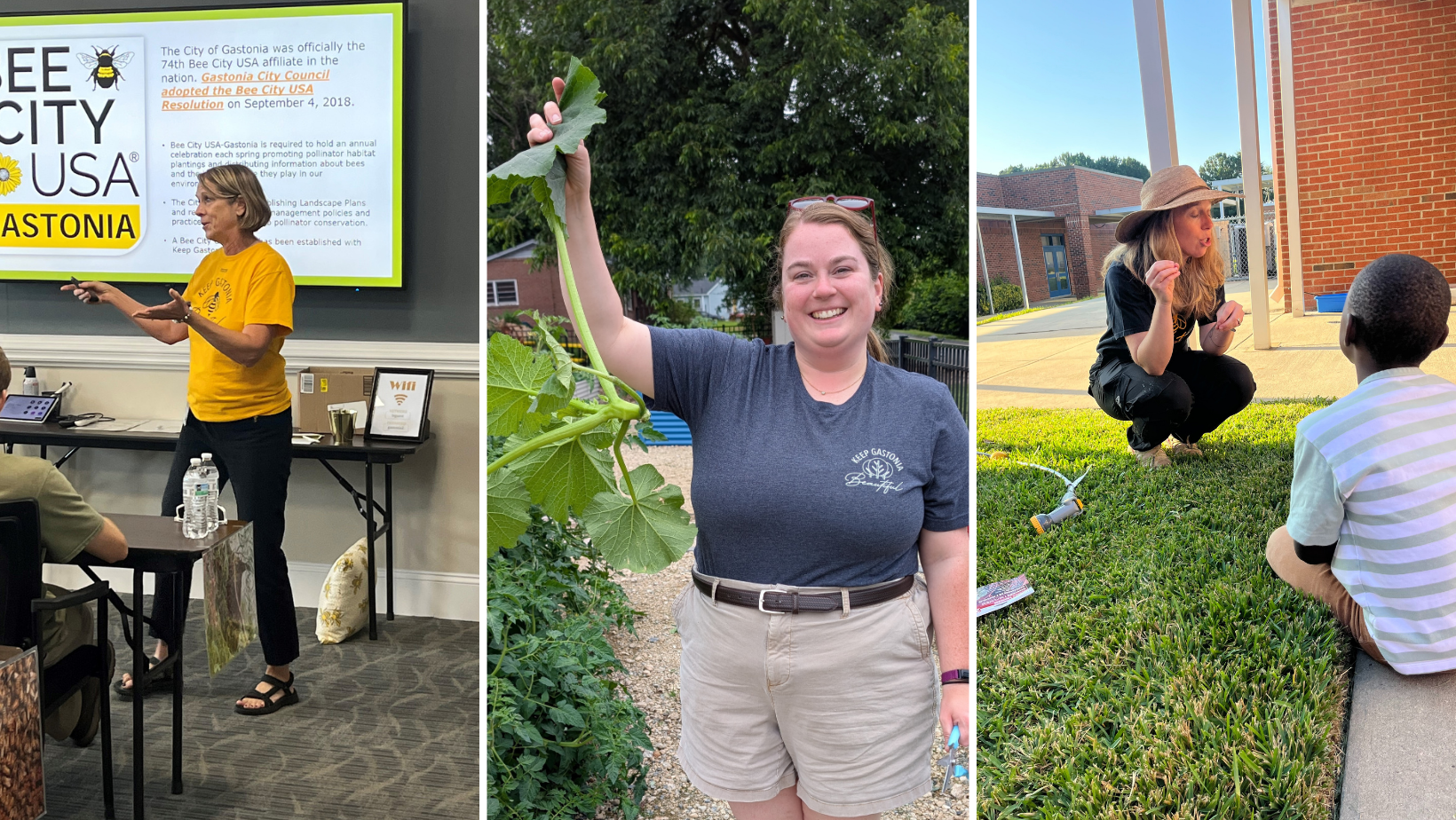
We appreciate the continued support of Gaston County Schools and extend our sincere thanks to the administrators and educators who have approved our educational programming for classroom use.
Keep Gastonia Beautiful offers a variety of FREE, standards-aligned environmental education programs for public, private, charter, and homeschool students throughout Gaston County. Our engaging presentations are designed to complement classroom learning and inspire environmental stewardship through interactive, age-appropriate activities.
To request a program for your classroom or grade level, please complete this Program Request Form. Once your request has been submitted, the Keep Gastonia Beautiful staff member assigned to your school will contact you to confirm your preferred date and finalize the details.
If you have questions about our educational programs, please contact us at keepgastoniabeautifulnc@gmail.com. The staff member assigned to your school will be happy to assist you.
Program Information
• All programs are provided free of charge.
• Programs are designed for individual classroom presentations.
• Multiple classrooms or grade levels may be scheduled on the same day, based on staff availability.
• Programs are available for public, private, charter, and homeschool groups throughout Gaston County.
Resources
Printable flyer to share with your team
Printable document with all program descriptions to share with your team
Program Request Form
|
Keep Gastonia Beautiful - First Semester Programming |
||
|
Kindergarten - Sea Turtle Survival |
|
|
|
1st Grade - Hands on Dirt |
|
|
|
2nd Grade - Eyes on Weather |
|
|
|
3rd Grade - Tree Identification |
|
|
|
|
4th Grade -Pollinator Adaptations |
|
|
|
5th Grade - Vermicompost & the Soil Food Web |
|
|
Keep Gastonia Beautiful - Second Semester Programming |
||
|
Kindergarten - Super Trees Through the Seasons |
|
|
|
1st Grade - Earth Magic |
|
|
|
|
2nd Grade - Recycle Jams |
|
|
3rd Grade - Waste Detectives |
|
|
|
|
4th Grade - Wanderin’ about Watersheds? |
|
|
|
5th Grade - Wrapping Up the Food Web |
|
NEW THIS SCHOOL YEAR...CURRICULUM KITS
Need to enrich science time? We have kits that include everything you need for the following lessons.
Water Cycle Game- Incredible Journey
Use our kit to send your students on the journey of a water drop. They will be surprised to see the “cycle” in action is not circular! Comes with options for indoor or outdoor set up and instructions. Pairs great with 5th grade water cycle curriculum, but can be used for any grade with ability to read and follow instructions independently.
Common Water
How is water used and shared by people over time? In this kit you will have the opportunity to see how water resource use has changed as demand by society has increased. What happens if water is polluted? The kit includes sponges and food coloring with instructions. Makes a great addition to social studies/community discussions.
Litter Clean Up
Do you have a group interested in a service project for Earth Day or want to beautify school grounds before a big event? Check out a kit that includes garbage bags, litter pickers and a scale. Return all items along with your record of how much litter your team collected! Send in pictures and we will shout you out on socials (as allowed).
FIELD TRIP STOPOVERS
Extend your field trip with a visit to one of our self-guided educational experiences!
StoryWalk® at Rankin Lake Park
Begin your journey at the boathouse and follow the short, paved path to the pavilions while enjoying a featured environmentally themed children's book. The StoryWalk® combines reading, movement, and nature for a fun learning experience.
Chronolog Time-Lapse Stations
Explore our Chronolog stations to see how local landscapes change over time. Visit one at the Rankin Lake Park bridge between the parking lots, and another along the Avon Creek Greenway near Lineberger Park
Pollinator Census
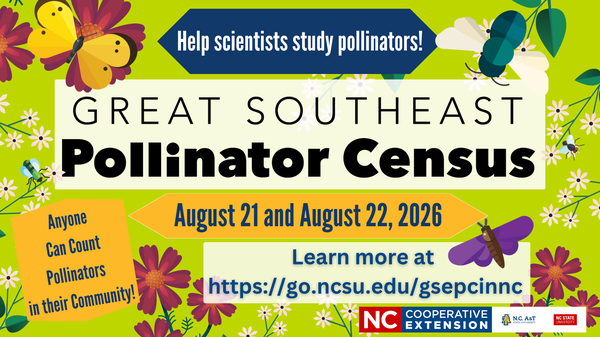
Join the Great Southeast Pollinator Census!
Did you know you can help scientists better understand pollinator populations in just 15 minutes?
The Great Southeast Pollinator Census (GSEPC) is an annual community science project held each August that invites people of all ages to observe and count pollinators visiting flowering plants. Whether you're watching bees in your backyard, butterflies in a community garden, or pollinators at a local park, every count provides valuable data that helps researchers track pollinator diversity and abundance across the Southeast.
Participating is simple, fun, and makes a real difference!
To help you get started, Master Gardener Volunteers will be at the Gastonia Farmers Market on Saturday, August 15 and August 22 with census count sheets, educational materials, and other pollinator-themed goodies. Stop by to learn more, ask questions, and pick up everything you need to participate.
Can't make it to the market? No problem! You can complete a census count right from your own backyard using the resources linked below.
Together, we can help protect the pollinators that keep our gardens, farms, and natural spaces thriving.
2026 Great Southeast Pollinator Census Resources:
Counting Sheet (English) (Spanish)
Check out the GSEPC in NC Counting and Insect Identification Guide
Chronolog
See Nature Change Over Time
Have you ever wondered how a creek, streambank, park, or natural area changes over time? Now you can help us document those changes!
Keep Gastonia Beautiful, in partnership with the City of Gastonia’s Storm Water Utility Division, has seven Chronolog stations located throughout the city. Chronolog is a community science project that uses time-lapse photography to document changes in our natural spaces over time. Each time you visit a Chronolog station, you can take a photo from the designated location and submit it to the Chronolog platform. As more photos are collected, they are compiled into a time-lapse sequence that allows residents, scientists, and City staff to observe and better understand changes in the environment.
How It Works
- Find a Chronolog station at one of our participating locations.
- Take a photo from the designated spot, following the visual guide on the stand.
- Follow the instructions on the stand to submit your photo to Chronolog using the site-specific code.
- Watch the changes over time as your photo becomes part of a growing collection of community observations.
Your participation can help document changes such as streambank stability, erosion, vegetation growth, water conditions, and other environmental changes. The information collected can provide a valuable visual record for community members, scientists, and City departments.
Explore Our Chronolog Locations
Visit a Chronolog station while you're enjoying one of Gastonia's parks, greenways, or natural areas and become part of this community science effort.
KGB 101 Avon Creek at Lineberger Park
KGB 102 Kaglor Creek at Rankin Lake
KGB 105 Coming soon..
KGB 107 Schiele Museum Nature Trail Bridge
Why Community Science Matters
We all spend time outdoors—walking on a greenway, visiting a park, exploring a creek, or simply enjoying nature. Community science gives everyone an opportunity to contribute to our understanding of the environment. You don't need to be a scientist to make a difference. One photo may seem small, but thousands of observations collected over time can help tell a much bigger story.
By participating at a Chronolog station, you're helping create a visual record of Gastonia's natural spaces and contributing information that can help us better understand, monitor, and care for our community.
Take a photo. Share what you see. Help us watch Gastonia change over time.
Storywalk
Our Storywalk is located at Rankin Lake 1750 Rankin Lake Road, Gastonia, NC.

Start your journey by the boathouse and end by the pavilions. This is an all paved path along the waterfront with 13 pages for your family to enjoy!What is a StoryWalk®? It's a fun activity that engages families in literacy and getting active. Pages from a children's book are printed and placed in displays along a walkable path. Families will be able to walk a short path at Rankin Lake and read a page of a book at each stop.We welcome children of all ages, the chance to get out and read while they are at Rankin Lake!Tag us on social media or send us a picture of your group enjoying this new addition to our beautiful park!#KGBStoryWalkInterested in finding other Story Trails throughout the state? Head over to the NC State Library The Storywalk® concept was created by Anne Ferguson of Montpelier, VT and was developed with the help of Rachel Senechal, Kellogg-Hubbard Library. Now this concept has been brought to Gastonia provided by Gaston County DHHS through a grant to Keep Gastonia Beautiful.
Current featured book:
 Little Turtle and the Changing Sea by Becky Davies
Coming soon:
 Save the Bees by Bethany Stahl
 The Little Raindrop by Joanna Gray
 Over in a River Flowing Out to the Sea by Marianne Berkes
 The Leaf Thief by Alice Hemming & Nicola Slater
 Save the Butterflies by Bethany Stahl
 Save the Air by Bethany Stahl
 Mari the Mariola By Sarah McCune
 I Can Save the Earth! by Allison Inches
NC Forest Service Grant
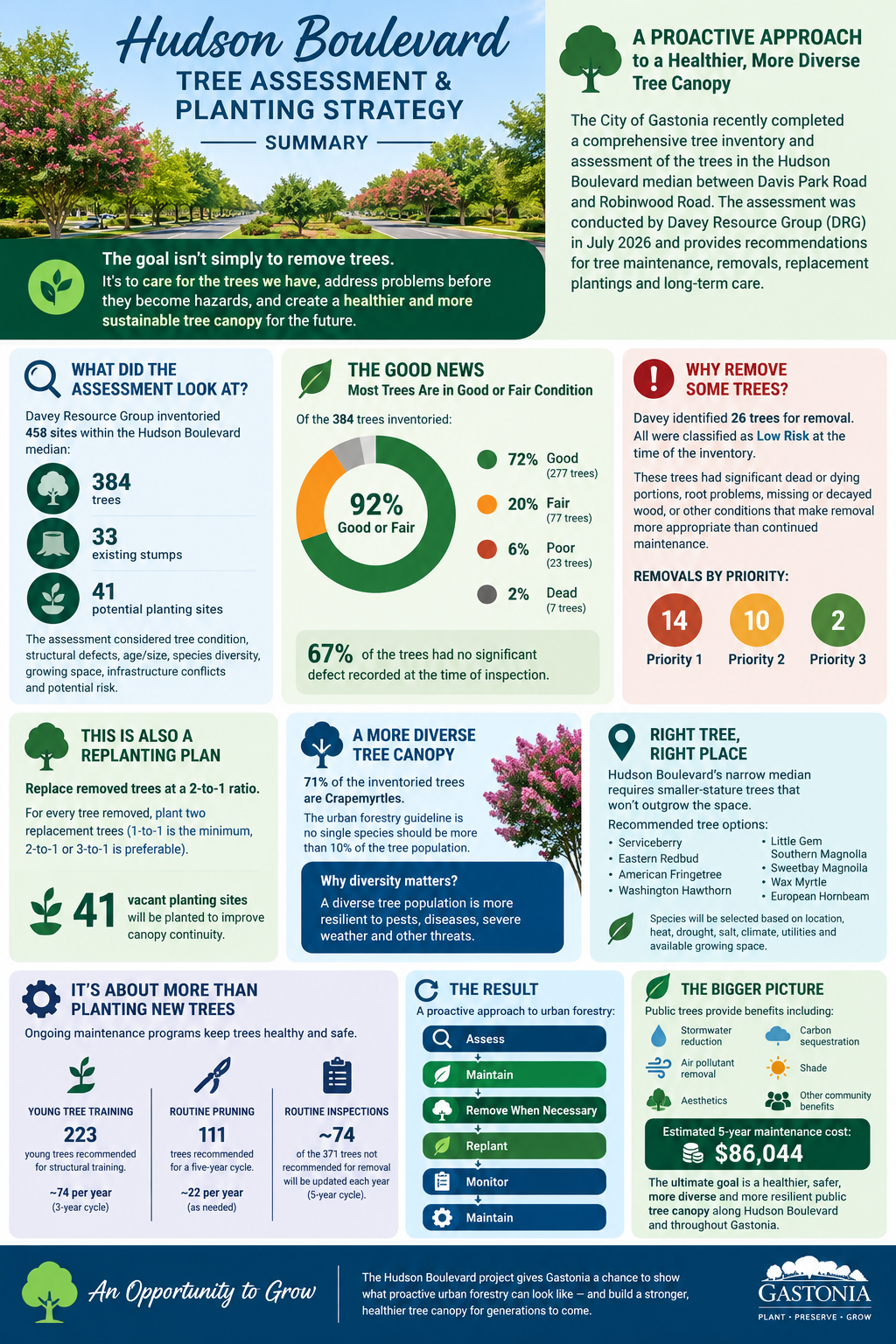
Hudson Boulevard Tree Maintenance and Planting Project
The City of Gastonia has been awarded funding for this project, which was provided through a USDA Forest Service Urban & Community Forestry Grant from the North Carolina Forest Service, Department of Agriculture and Consumer Services and the USDA Forest Service. This institution is an equal opportunity employer.Project Goals
- Improve safety by removing dead, damaged, and hazardous trees.
- Restore and enhance the tree canopy along Hudson Boulevard.
- Improve the appearance of a major gateway corridor.
- Increase the long-term health and resilience of the City's urban forest.
- Educate and engage residents in the value of urban trees and sustainable corridor management.
Get Involved
Residents will have opportunities to learn about the project, provide feedback through a public survey, and follow project progress through the City's website, social media channels, and Tree Commission meetings.
Offices for Keep Gastonia Beautiful are located at the Garland Municipal Business Center at 150 S. York Street on the second floor.